Owning Shoreline at The Palisades: A Waterfront Buyer’s Guide
A waterfront purchase involves more than the view. Review dock approvals, water levels, shoreline vegetation rules, and parcel-specific rights before closing at The Palisades.
· 6 min read
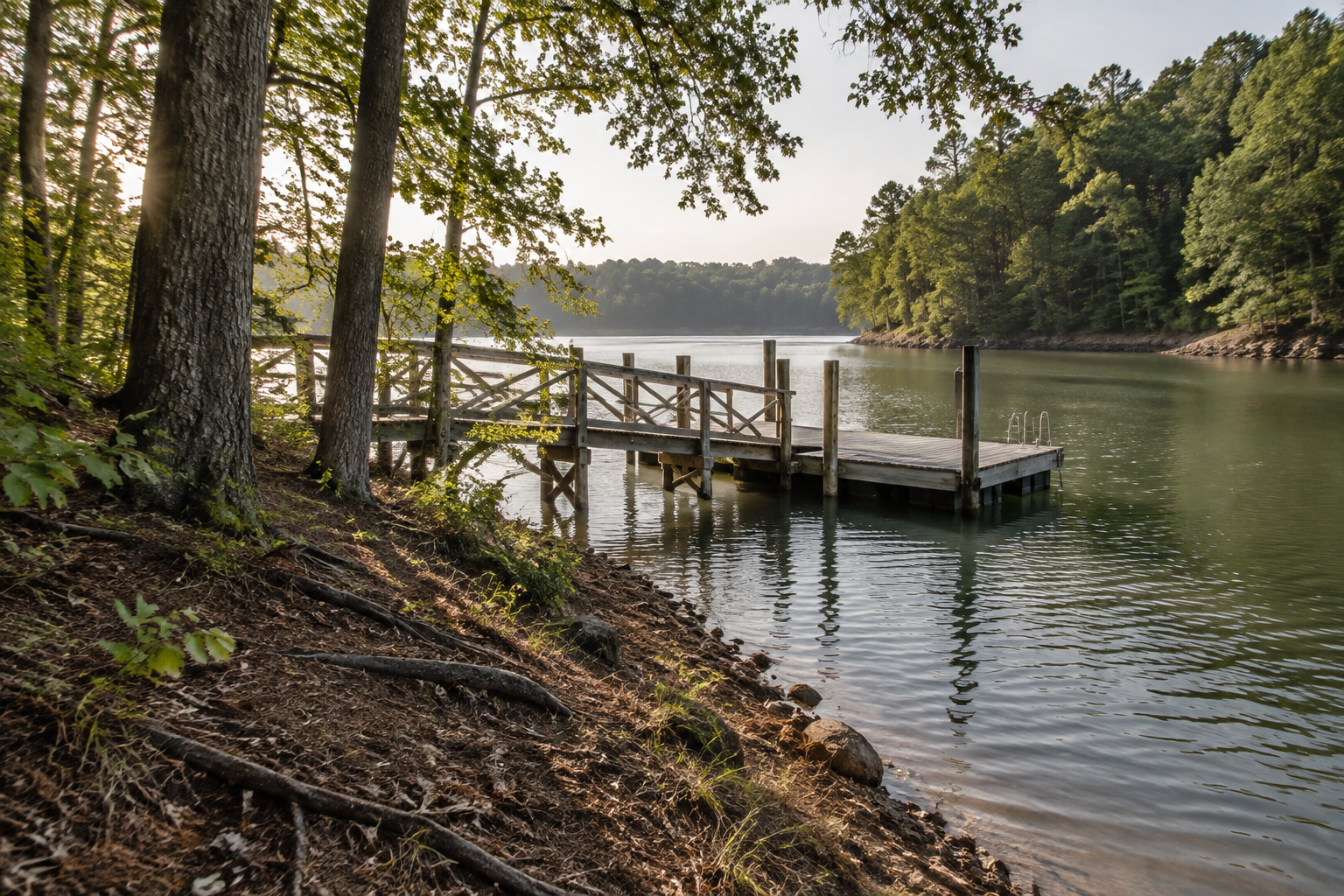
What waterfront ownership at The Palisades actually includes
A shoreline purchase at The Palisades begins with a distinction that photographs cannot explain: owning property beside Lake Wylie is not the same as holding unrestricted rights to the bank or water. For buyers considering southwest Charlotte NC, the essential question is not simply where the lawn ends, but which rights, restrictions, and approvals apply beyond it.
Have a North Carolina closing attorney review the deed, recorded plat, title exceptions, and any shoreline-related easements. A current survey should help establish the relationship between the parcel, existing structures, and relevant boundaries. Do not assume that a fence, mowed edge, or path marks the legal limit of ownership or permitted use.
Treat listing language such as “waterfront,” “private dock,” or “dock potential” as a starting point for investigation. Ask what documents support each claim. A water view does not establish shoreline ownership, and shoreline frontage alone does not establish eligibility for a new dock. Both questions require a parcel-specific answer.
Who approves Lake Wylie docks and shoreline work
Duke Energy administers shoreline use through the federally licensed Catawba–Wateree Shoreline Management Program. Its review is separate from local development approval and any community architectural review. Begin with Duke’s current requirements and the shoreline classification applicable to the property, rather than using a neighboring dock as evidence of what will be allowed.
A proposed dock may be evaluated for its footprint, extension into the water, slip arrangement, and effects on navigation and neighboring uses. Dredging, bank stabilization, and shoreline vegetation work raise additional questions. Describe the entire project when seeking guidance; a dock application should not leave an intended excavation or access path unmentioned.
For a property within The Palisades, obtain the applicable recorded covenants and architectural standards before choosing materials or commissioning construction drawings. Confirm which association has review authority over that parcel. County, state, or other approvals may also be necessary, depending on the work. One approval should never be read as permission to bypass another.
How full pond affects waterfront use on Lake Wylie
Full pond is a reference elevation, not a promise that the lake will remain at that level. Duke Energy publishes Lake Wylie’s full-pond information and current lake levels. Use those primary records when interpreting a seller’s depth measurements, and ask when, where, and at what lake elevation each measurement was taken.
Depth at the end of a dock tells only part of the story. A boat also needs a usable route between its berth and the navigable channel. A shallow approach can constrain access even when the slip itself holds water. Evaluate the route and berth against the draft of the boat you actually intend to use.
Visit during lower water if practical, and review available historical level records alongside a site assessment. Records show reservoir conditions, not the underwater contours of an individual cove. A floating dock follows changing water levels only within the limits of its design and surroundings; it cannot create depth where the lakebed rises.
What shoreline vegetation can you remove
The trees and understory between a house and Lake Wylie are not merely landscaping. Shoreline vegetation can help hold soil, filter runoff, and protect habitat. Before planning a wider view, lawn extension, or new stairway, establish which shoreline-management restrictions, recorded buffers, and local requirements apply to that particular strip of land.
Ask Duke’s shoreline staff what written authorization is required for the proposed work, including pruning, tree removal, clearing, or changes to shoreline access. Confirm applicable community requirements separately. A contractor’s familiarity with waterfront projects is useful, but it is not a substitute for approval tied to the property and scope of work.
Inspect the bank for exposed roots, undercut soil, sediment movement, and deteriorating stabilization. If repairs appear necessary, obtain a qualified assessment and confirm the permitted method before budgeting the project. Do not assume that adding stone, rebuilding a retaining structure, or dredging beside the bank qualifies as routine maintenance.
How to check an existing dock before closing
Request the dock authorization, approved drawings, subsequent modification approvals, and any correspondence about compliance. Compare those records with the structure on site, including lifts, roofs, platforms, and shoreline connections. A dock’s age or apparent condition does not establish that every component was approved, and an earlier authorization may not cover later additions.
Ask Duke directly about the authorization’s current status and the ownership-change process. Establish whether a transfer, new application, inspection, or corrective work is required, and who will complete it. Have the closing attorney address unresolved obligations in the transaction documents rather than leaving them to an informal agreement after possession.
Arrange an appropriate condition inspection, with electrical components assessed by a qualified professional where present. Permitting and physical safety are different questions. Also confirm access for repairs, maintenance responsibilities, and any shared-use arrangements. A sound dock can still come with unclear rights; a documented dock can still need substantial repairs.
What waterfront buyers should confirm before closing
Build a shoreline file during due diligence: title and survey records, applicable covenants, dock approvals, written agency responses, inspection findings, and water-depth observations referenced to lake elevation. Ask the closing attorney how unresolved shoreline questions should affect the contract and closing decision. Settle essential feasibility questions before committing to the property.
If boating is central to the purchase, verify applicable navigation and no-wake restrictions through the relevant authorities, including the North Carolina Wildlife Resources Commission for North Carolina waters. If a new dock or shoreline alteration is essential, seek written, property-specific guidance early. Neither a listing description nor a neighbor’s experience establishes approval.
Read our dock-permitting guide alongside our broader Lake Wylie coverage, then use those questions when comparing homes. This journal is independent of The Palisades Country Club, its HOA, and its developer, with no affiliation, sponsorship, or endorsement. The purchase decision should rest on current primary-source records and professional review of the actual parcel.
Common questions
- Does a waterfront lot at The Palisades automatically qualify for a dock?
- No. Ask Duke Energy to confirm the parcel’s shoreline classification and applicable requirements, then check community restrictions and any additional permitting obligations.
- Does full pond mean a dock will have usable water year-round?
- No. Full pond is a reference elevation; usable access depends on changing lake levels, local lakebed contours, the approach route, and the boat’s draft.
- Can I clear shoreline trees after buying the property?
- Do not assume ownership allows clearing. Confirm applicable shoreline, buffer, and community rules, and obtain required written approvals before vegetation work begins.
An independent editorial entry. Details change over time and should be verified with the relevant primary source.
All journal entries